
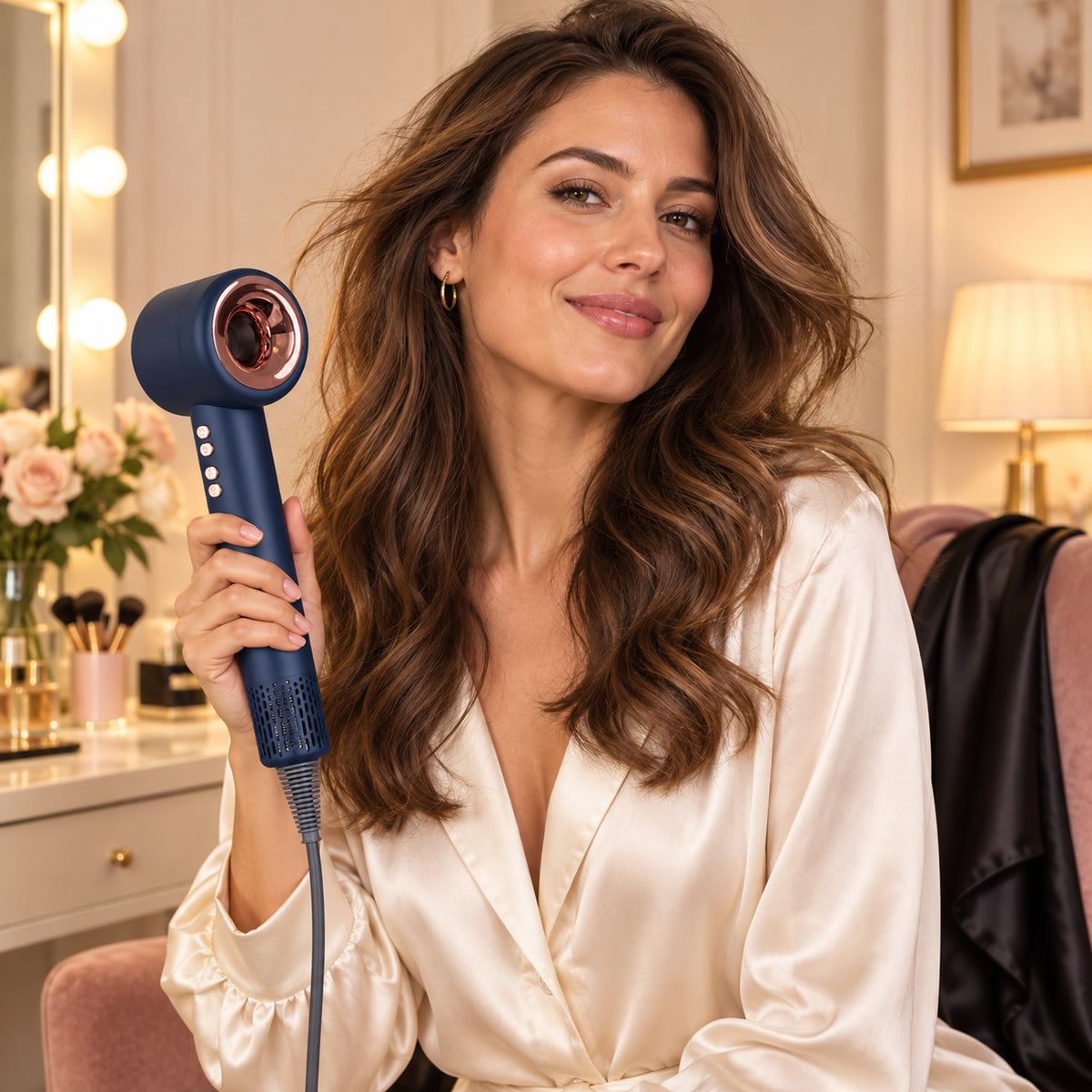
Thick hair often needs a plan rather than a stronger setting. A dense section can look finished on the outside while remaining damp beneath. If you start shaping before that moisture is managed, the routine can become a series of repeated passes. Separate the main drying stage from the detailed styling stage so that each has a clear purpose.
Work out what makes your hair demanding
Thick can describe individual strands, a high density of hair, or both. Length and natural texture also change the amount of work in each section. Look at where your routine slows down: the roots, the underneath layers or the ends. That is the area to divide more carefully.
After gently removing excess water, follow the appliance guidance for pre-drying and heat protection. Keep the tool moving at an appropriate setting. Do not hold concentrated heat on a stubborn area while the surrounding hair is trapped beneath it.
Use layers you can check properly
Clip the upper hair securely away and release a manageable lower row. Take individual working sections from that row, keeping the remainder separate. The right size is the amount your brush or head can control evenly, not the largest section you can squeeze onto it.
The Ionic Hair Dryer with Magnetic Attachments provides adjustable airflow, with attachments depending on the selected option. Confirm what your bundle includes. Where a compatible nozzle is supplied, use its directions to organise the airflow rather than sweeping across several loose layers at once.
Check the roots as well as the surface
Before releasing the next row, make sure the current section has reached the condition required for your chosen styling step. Inspect the area near the roots and behind the ears, where hair can stay tucked together. A section that feels difficult to shape may simply be too large to dry consistently.
If you move to an air-styler attachment, separate the section again rather than feeding the whole dried row through it. The 7 In 1 Hair Dryer Styler offers a multi-head approach; its own instructions determine the fitting and preparation for each head.
Save detailed shaping for selected areas
You may not need the same amount of curl or lift throughout dense hair. A smoother lower layer with movement at the front can feel more balanced than making every section equally full. Decide that before spending time on an all-over shape you do not want to wear.
Pause if your arms become uncomfortable and put the tool down safely. Let finished sections settle and inspect the combined shape before revisiting individual strands. Our styling-tool guide helps distinguish the different finishes. Build a method that gives you control around your whole head rather than judging success only by how quickly the front dries.


Leave a comment
This site is protected by hCaptcha and the hCaptcha Privacy Policy and Terms of Service apply.